
Automation tools have become essential for handling repetitive digital tasks. Whether in gaming, productivity workflows, or software testing, users often need tools that can perform repeated actions quickly and efficiently.
Among these tools, Auto Clicker remain one of the most popular options. However, they are not the only available automation solutions. Many other clicking tools offer similar or expanded capabilities.
This article explores Auto Clicker vs Other Clicking Tools to understand their differences, advantages, and the best automation options available in 2026.
Table of Contents
Understanding Auto Clicker Tools
Before comparing automation tools, it is important to understand what an auto clicker does. An auto clicker is best software that automatically performs mouse clicks at a specific location and interval. Instead of manually clicking a button repeatedly, the program handles the task automatically.
One reason the Auto Clicker vs Other Clicking Tools comparison is important is that auto clickers are designed to be simple and easy to use. Most tools allow users to configure:
- Click speed
- Click location
- Click type (left or right click)
- Number of repetitions
These settings make auto clickers suitable for repetitive tasks that require frequent clicking.
Why Automation Tools Are Popular in 2026?
Automation tools are widely used because digital environments often involve repetitive interactions. Tasks such as confirming notifications, collecting rewards, or testing software interfaces require repeated actions.
The Auto Clicker vs Other Clicking Tools discussion highlights how automation improves efficiency by removing the need for constant manual interaction.
Key benefits of automation tools include:
- Faster task completion
- Reduced physical strain
- Improved workflow consistency
- Better productivity during repetitive tasks
As technology evolves, automation tools continue to become more sophisticated.
Types of Clicking Tools Available
While auto clicker platforms are the most widely recognized option, several other tools perform similar functions. Understanding these alternatives helps users evaluate the Auto Clicker vs Other Clicking Tools comparison more effectively.
1. Macro Automation Tools
Macro tools allow users to record a sequence of actions and replay them automatically. Unlike a basic auto clicker, macros can automate multiple tasks such as mouse movements, keyboard inputs, and menu navigation.
In the Auto Clicker vs Other Clicking Tools comparison, macro tools are more flexible but also more complex to configure.
2. Script-Based Automation
Some automation tools rely on scripts written in specialized languages. These scripts allow users to define complex rules and conditions for automation.
Script-based tools provide powerful customization but often require technical knowledge. For beginners, auto clickers are usually easier to use.
3. Browser Automation Tools
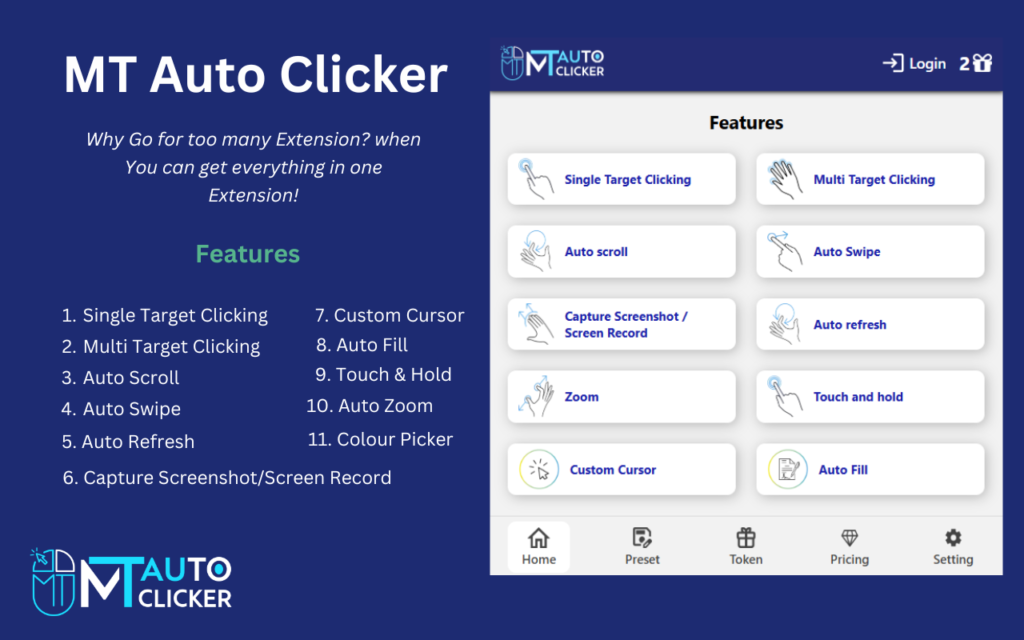
Browser automation tools operate within web browsers. They can simulate clicks, form submissions, and navigation across web pages.
These tools are often used for testing web applications or managing repetitive online tasks.
4. Task Automation Software
Comprehensive automation platforms can handle multiple types of actions, including clicking, typing, file management, and system commands.
In the Auto Clicker vs Other Clicking Tools comparison, these platforms provide broader functionality but may be unnecessary for simple tasks.
Auto Clicker vs Other Clicking Tools: Key Differences
Understanding the differences between these tools helps users choose the best automation solution.
1. Simplicity
Auto clickers are known for their simplicity. Users can install the software, configure a few settings, and begin automation immediately. In the Auto Clicker vs Other Clicking Tools comparison, other tools often require more setup and technical understanding.
2. Flexibility
Macro tools and script-based automation platforms offer more flexibility. They can automate entire workflows rather than simple clicks. However, this flexibility comes with increased complexity. Many users prefer auto clickers because they are easier to manage.
3. Learning Curve
Another key factor in the Auto Clicker vs Other Clicking Tools discussion is the learning curve. Auto clickers are beginner-friendly, while advanced automation platforms may require training or programming knowledge.
4. Performance
Auto clickers are typically lightweight programs that run efficiently even on low-resource systems. Larger automation platforms may consume more memory and processing power.
Gaming Applications
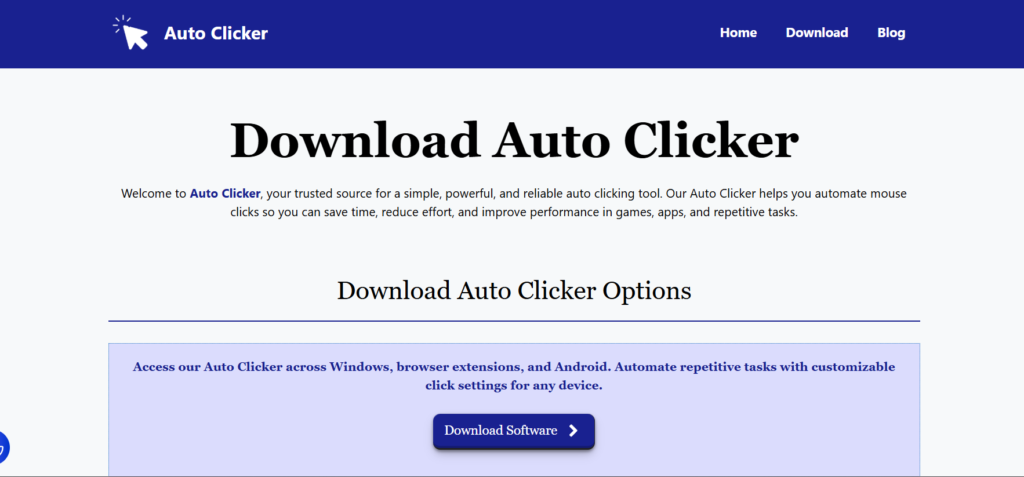
Gaming is one of the most common environments where automation tools are used. Many games involve repetitive actions such as collecting resources or triggering abilities.
In the Auto Clicker vs Other Clicking Tools comparison, auto clickers are especially popular among players of click-based and incremental games. They allow players to automate repetitive clicking while focusing on strategy and progression.
Macro tools can also be useful in gaming, especially when multiple actions need to be automated in sequence. However, the simplicity of auto clickers makes them the preferred option for many players.
Productivity and Workflow Automation
Automation tools are also widely used in professional environments. Tasks such as data entry, interface testing, and routine confirmations often require repetitive actions. In the Auto Clicker vs Other Clicking Tools comparison, auto clickers are ideal for simple workflows that require only clicking.
For more complex tasks involving multiple steps, macro tools or full automation platforms may be more appropriate. For example, developers may use automation scripts to simulate user interactions across an entire application.
Key Features to Consider
When choosing between automation tools, users should evaluate several important features. The Auto Clicker vs Other Clicking Tools comparison often highlights these key capabilities.
- Adjustable Click Speed: Automation tools should allow users to control how quickly clicks occur.
- Custom Click Locations: Precise control over where clicks occur is essential for accurate automation.
- Multi-Point Clicking: Some tools allow multiple click points to be automated simultaneously.
- Hotkey Controls: Hotkeys provide quick access to start or stop automation.
- Recording and Playback: Macro recording allows users to capture and repeat entire sequences of actions.
Safety and Responsible Usage
Automation tools should always be used responsibly. The Auto Clicker vs Other Clicking Tools discussion includes the importance of respecting platform guidelines and application rules.
Certain platforms may restrict the use of automation tools, particularly in competitive environments. Users should always review relevant policies before using automation software. Downloading tools from trusted sources also helps prevent security risks.
Future Trends in Clicking Automation
Automation technology is evolving rapidly. Future developments may include artificial intelligence that automatically detects repetitive actions and suggests automation.
In the future, the Auto Clicker vs Other Clicking Tools comparison may include tools that adapt dynamically to user behavior. Cross-platform automation and cloud-based tools may also become more common. These innovations will likely make automation tools even more powerful and accessible.
Conclusion
Automation tools have transformed how users handle repetitive digital tasks. The Auto Clicker vs Other Clicking Tools comparison shows that while many automation solutions exist, each one serves a different purpose.
Auto-clickers remain one of the simplest and most efficient tools for repetitive-clicking tasks. Their ease of use, reliability, and flexibility make them ideal for both gaming and productivity environments.
Other automation tools, such as macro recorders and script-based platforms, provide additional functionality but may require more technical knowledge.
By understanding the strengths and limitations of each option, users can choose the best automation tool for their needs in 2026.